Showing posts with label rubric. Show all posts

Wednesday, December 7, 2016

Feedback vs. Grades

Joe gets 100% on his project.  Sara got a 60%.  What is the difference?

Within the classroom, I have seen teachers that give back scores and allow time to meet with students to discuss and give feedback on why they received the score that they did.  We are moving into an age where instead of the percentage being the focus, the feedback will be the focus.

Giving continual and consistent feedback is much more time-consuming than giving a percentage grade, but it is also much more meaningful.  It encourages the student to grow, seeing the skills or concepts where they are proficient and focusing their efforts on the areas where they are struggling.

Project-based learning lends itself to assessment via feedback.  It allows for a continual process of improvement, getting input from the teacher, making small edits, growing into the best and most polished example of the student’s ability.  This also strengthens the student’s “soft skills:” communication, collaboration, adaptability, reflection.

Have you ever told a student that they are really smart?  I’m guilty.  But this feedback isn’t enough.  How are they smart?  What made me believe that?  Is intelligence able to be ranked?  Instead of giving this general feedback, what else could we say?  See this link for some ideas.

We have some amazing examples of teachers already implementing this idea in our district, from the World Language Department using proficiency-based grading (see below for resources), to the standards-based report cards at the elementary level, to the shift from quizzes and tests to project-based learning.  

As the workplace becomes an environment that focuses on “projects” and collaboration, I hope you will continue to feel inspired and encouraged to move away from traditional assessment and embrace a more modern and meaningful approach by giving feedback.

For some ideas, check out this article from Edutopia.

-----

Language department proficiency based “grading” system resources

Wednesday, April 6, 2016

Best Practices in Classroom Collaboration

As part of my graduate class right now on Online Teaching and Learning, I am learning a lot about collaboration in an online classroom.  As mentioned by the authors of the many articles I read on this topic, many of these ideas can be applied to the traditional classroom, so I thought I would share.  These will be especially useful to those of you using hybrid or blended learning with a station rotation.


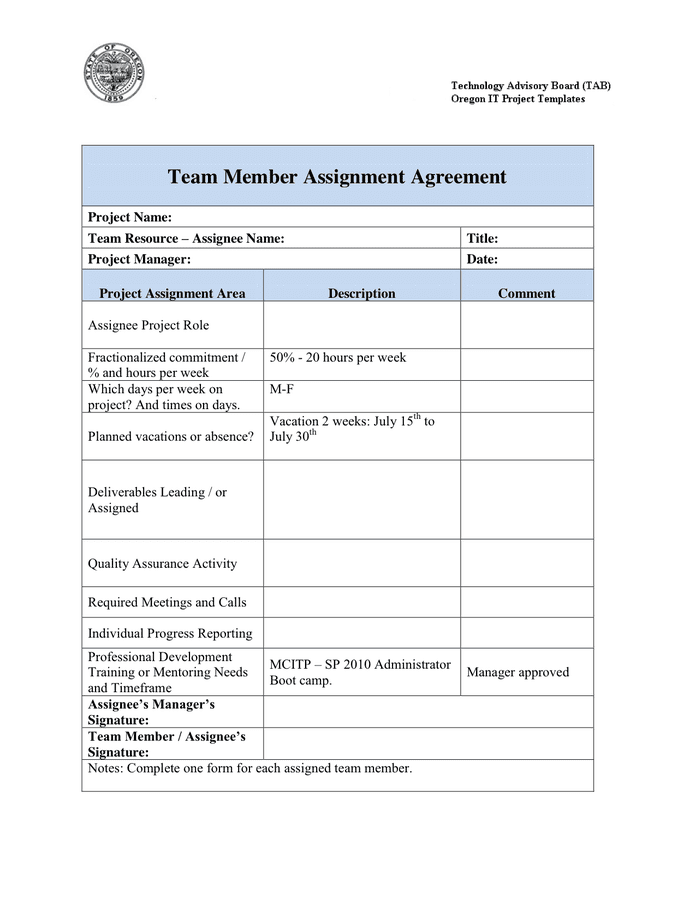
  1. Start with a lesson on teamwork.  Help learners understand team roles, how to be a good team member, and how to resolve conflicts.  One example of this is a lesson where students create guidelines in small groups of what teamwork looks like, then this is refined as a class into a collaboration contract, either for the whole class or for each team.   A sample “Team Agreement” could include:
  • Project Title and Due Date
  • Project objectives and purpose
  • Team members
  • Member expertise or team roles
  • Project tasks and deadlines
  • Deliverables (the new word for the finished product, to put the responsibility back on the student)
  • Conflict management procedure
All members of the class sign this and agree to abide by the parameters in it.  A smaller lesson before diving deep into a more complex project will also help build team rapport and work out any personality conflicts.


  1. Use a two-part collaboration grade - one for the group and one for the individual.  The group grade could have different criteria than the individual grade.  This will help to avoid “loafing”, or a small percentage of the group doing a large percentage of the work.  The individual grade could include a portion of peer evaluations done by group members, for example, students A, B and C give input into the grade of student D.  A sample peer evaluation could include:
    • Does this team member accept responsibility for tasks determined by the team?
    • Does this team member respect differences of opinion and backgrounds?
    • Does this team member provide positive feedback of team member accomplishments?
    • Does this team member keep in contact with team members for the purpose of maintaining team cohesion and collaboration?
    • Does this team member meet team deadlines?
If you’re looking for a good rubric resource, I recommend Cult of Pedagogy’s single-point rubric.  Lay out the expectations and then indicate when they fall above or below those expectations.


  1. Be ready with a list of teamwork problems and possible solutions.  Depending on the age of your students, you may want to mediate conflicts, but encouraging students to work out their own problems leads to a lot of personal growth.  Problems can include team members not contributing, being too bossy, using negative language, personally attacking other team members, technical difficulties, misunderstandings, students who complain, etc.  Hopefully my list doesn’t discourage you from using collaboration - the good outweighs the bad!


  1. Group students according to technical ability, learning style or common interests.  These arrangements will allow for each group to have at least one student who is capable of troubleshooting issues with technology and they will start in the group with something to discuss.  Visual learners can create a comic, kinesthetic learners could design a webpage, auditory learners can create a song, etc.  This also allows for more personalization and student-driven learning.


  1. Consider blogging for conducting class discussions.  Margaret Anderson, a professor at the State University of New York at Cortland, starts with a question the first week that everyone answers directly.  Then in the following week, students are encouraged to respond to a class member’s post.  Be careful about grading by counting posts - quality over quantity, in order to create equitable access.  Some students might work on this at home, but that is not a possibility for all of our students.  Blogging encourages reflection and connection to the real world and their lives, which makes more synaptic cell-to-cell bridges, thus increasing dendritic growth. The other advantage of blogging is that posts are timestamped, so you can see when the post was completed.  If this sounds like a possibility to you, check out kidblog.org or consider blogger.com, since it works seamlessly with our Google accounts.  If you prefer to keep it simple, stick with Google Classroom for threaded discussion posts.

I hope you are able to use at least one of these ideas.  Please feel free to send me more ideas for a future post - I learn a lot from my colleagues.  Please also let us know if you want help with implementing any of these ideas.  We are a resource, so use us!

Wednesday, March 2, 2016

Project-Based Learning

When thinking about assessments, we think of tests, quizzes, homework, worksheets and projects.  Projects used to be a “once in awhile” assignment, sometimes in partners or small groups, which was graded with a rubric or scoring tool.  Due to the time it took to complete, it was not the regular teaching method.  In recent years, there has been a lot of research into the benefits of project-based learning and the literacies that it develops.


Project-based learning (PBL) is defined as a teaching methodology that encourages students to gain the skills necessary so that they can solve a problem, investigate an engaging or complex question, or meet a challenge.  It fulfills standards, gives a real-world context to their learning, allows for self-reflection and continued revision, and is individualized to the needs, skills, and preferred learning of each student.  Differentiation is automatic with project-based learning!


My personal favorite part of project-based learning is when group members help each other with questions and answers as they work through their idea together.  With that said, it has its pros and cons:


  • differentiation and student choice
  • student focuses on the skills they need to learn
  • student uses their strengths to help group members
  • collaboration
  • critical thinking
  • student voice is heard
  • students practice social skills
  • students use information, media and technology literacy skills
  • students accept the idea that their first idea might not be the best and revise and refine their work throughout
  • teacher is a guide to the students
  • focus on feedback rather than grades
  • final product has a global audience beyond the classroom
  • not all members of a group contribute equally
  • absent students miss collaborative time
  • miscommunications in a group dynamic
  • teacher cannot be with every group at once
  • time-consuming to complete and to grade


Project-based learning can support the best parts of hybrid or blended learning - a small amount of direct instruction that is supported with equal amounts of collaborative and independent work.


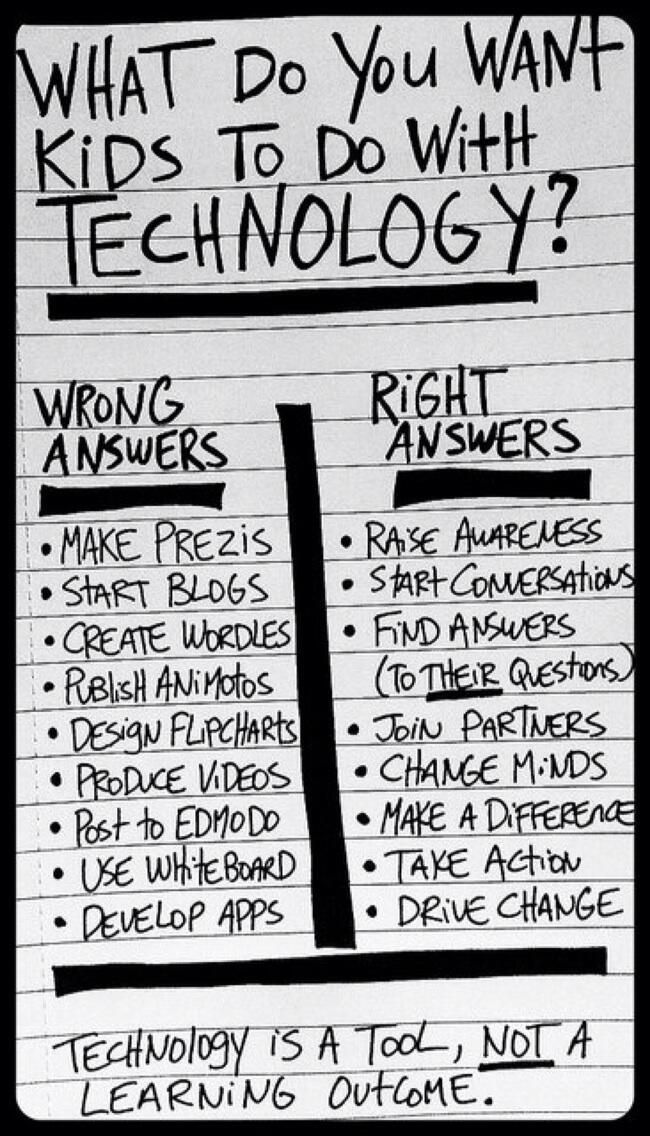
When deciding on project-based learning units, use this guide to help you decide if you are implementing it successfully.  Please also note that in many cases, technology is a helpful tool that will create these opportunities for your students, but it is only a tool and it is not always the best one.  Can you believe I said that?!  It’s true, though.  I love e-mail, but I also love hand-written notes.


As we saw in our last post, lots of teachers across the district are already using PBL and reaping the benefits of it:
  • our gifted learners do a combined research and art project with Megan Munyat and Deanna Dincher
  • our 8th grade ELA students design and advertise a new app idea during their propaganda unit with Pam Cooper and Jen Allen
  • our AP History students created an infographic about the presidential candidates and their positions on a number of election topics, then created a screencast on it and published it to YouTube with Amy Swartz


For more information on project-based learning, check out these resources by Edutopia.

To brainstorm project ideas, see your librarian!