Showing posts with label flexible strategies. Show all posts

Wednesday, January 24, 2018

Flexible Spaces

A new year brings new buzzwords.  Lately, we've heard a lot about "flexible learning/instructional strategies" and "flexible spaces."  Buzzwords are easy to toss around, but what do they actually mean?  Let's focus on the latter, "flexible spaces."


Applying the highlighted definition to spaces, we can presume that flexible spaces are easily modified to respond to various scenarios.

Flexible spaces help us create student-centered environments.  When we use a variety of techniques in our instruction, we are asking our students to use a variety of techniques in their learning.  That variety must be supported.  That is where flexible spaces come in to play.

Flexible spaces are popular for a reason.  They are set up with movement in mind, and are easily changed to suit the needs of your students and your instruction.

Around Warrior Run, you can see flexible spaces at all levels:

  • Libraries at all three schools
  • Middle school Makerspace
  • High school classrooms, notably 215D

Most recently, at the high school, we have redesigned rooms 105A and 105B to become The Commons.  Currently, it is available for classes, activities, department and faculty meetings, presentations, and more*.  Eventually, it will be a true flexible space with a specific criteria for student use.  It is in its early stages (more renovation needs to be completed), but it is able to be used now!  It is exciting to see a new student-centered space come to fruition at Warrior Run.


----------------------------------------------------------
* If you'd like to use The Commons, please use the reservation calendar.


Monday, November 6, 2017

Focus

As a parent of two who recently put passcodes on her children’s iPads, I am aware of the pull that technology offers to children.  As a person who has tried to put most of the content I need on a day-to-day basis on my phone so it’s always accessible, I understand how for some of us the device has become a constant distraction.


With that in mind, I offer some ways to gain, keep, or re-focus, whether you are trying to do this with your students or for yourself. This means using a device AND staying on task!


For students, secondary teachers can make use of Hapara to focus a student’s browsing by only allowing them to visit certain sites for a determined period of time.  Teachers using iPads can turn on guided access to limit the areas on the screen with which students can interact.  Having your students use their computers with their backs to you (and their screens facing you) can also help to make sure they are on task.  Ultimately, though, it’s acceptable and healthy to put away the devices and have a face-to-face conversation.


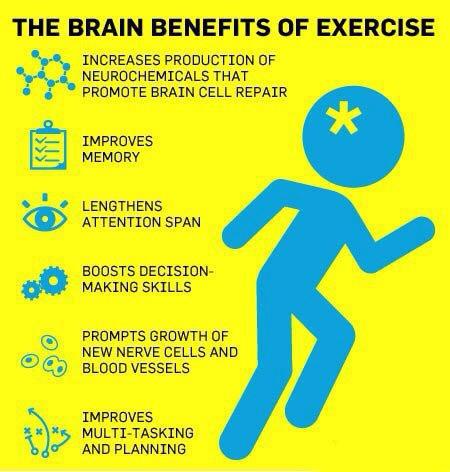
For teachers, there are several apps that will remind you to take a brain break: StandApp, Stand Up!, and Move It.  If you and your students are spending all period sitting at your desk, working on research, a presentation, or otherwise focusing on a task, it will be beneficial to you to get up and move, even if only for a stretch.  A Stanford study finds that walking is good for creativity, so it may be a good idea to work this into the lesson.  


Another aspect related to this are desk styles.  We have traditional table and chair, but now there are standing desks, fidget bands, yoga balls, node chairs, and the list goes on.  As someone who works with Greg, I can definitely see how these might be helpful!  :)

Wednesday, April 12, 2017

Student Choice

Project-based learning (PBL)
          Alternative assessments
                              Personalized learning
                                        Flexible strategies

These words and phrases are everywhere.  They all directly relate to student choice.  As Joshua Block so eloquently puts it in his article:

Learning that incorporates student choice provides a pathway for students to fully, genuinely invest themselves in quality work that matters.  Participating in learning design allows students to make meaning of content on their own terms.

So... how do the phrases above relate to student choice, and what does that actually look like?

Here are some examples of what's happening at Warrior Run.  (Keep in mind, these are just a few examples - there are so many instances of student choice occurring every day!)

Students recently completed a persuasive research essay on a social topic (e.g. hunting, paying NCAA athletes, year-round school).  Through the research paper process, they honed their skills in research, writing, and crafting an argument.  They are now applying those skills as they turn their papers into public awareness projects. Students were given time to explore four different project options and choose their own direction.  It is now up to them to meet the basic requirements in a creative way.

As students learned about this period in literary history, they were given the opportunity to 1) become experts, and 2) help their classmates learn.  In small groups, students researched a Dark Romantic author, analyzed a short story by that author, created a lesson plan, and developed an interactive assessment.

Wrapping up the unit on poetry, students were asked to explore different types of hands-on poetry, including book spine poetry, blackout poetry, and others.  With very little direct instruction, students used their understanding of poetic rules and terms as they navigated in the uncharted territory of hands on poetry.  In the end, they created true poetic masterpieces.

Students are just beginning their final novel study in high school.  They will be given the option to work independently from start to finish.  Their goal is to complete checkpoints (i.e. quizzes and other assessments) along the way as they show their teacher their understanding of the novel.  The ultimate goal is proficiency or better.

From a long list of options, students chose a topic from Peruvian culture (e.g. food, clothing, customs, geography) and a corresponding language skill (i.e. reading, writing, speaking, listening).  In small groups, students researched that topic and developed a stand-alone lesson to go with it, including a formative assessment.  In the end, there were 16 stations throughout the school.  In their groups, the students visited each of the other stations to learn about that aspect of Peruvian culture, demonstrate their understanding, and receive a stamp for their visit.  

As I said earlier, these are just a few examples of student choice at the high school.  Do you have an example from your classroom?  Please share in the comments.