Tuesday, April 18, 2017

Summer Reading Ideas

One more month and Summer will be upon us. As the days get longer and warmer, one can’t help but think about all the adventures a Summer can hold. However, don’t forget to include some reading in your daily adventures. There are many different ways reading can be a part of your summer fun. Check out some suggestions below:


Summer Reading Challenge:
On Teachers Pay Teachers, Teachable Teacher created a summer reading challenge checklist for all ages. It is a free downloadable sheet that challenges the user to read with a flashlight, read to a pet, read outside, and so much more.
It can be found at:


Take a weekly Trip to the Public Library:
Libraries don’t just have books. There are movies, audiobooks, digital downloads, magazines, and more. There are also multiple activities held each month. Making a weekly trip to the Public Library can ensure that children have many materials to read and explore this Summer.


Book Reports:
After your child reads a book, don’t just ask them if they liked it. Have them do a book report and work on their comprehension skills. Betsy Beier’s website has a great printable report that has children summarizing the story, recalling characters, and telling about their favorite part.
It can be found at:


Rethink Your Summer Reading Chart:
Summer reading charts come in all shapes and sizes. On the site “Chicken Babies” the creator Erin has an interesting take on charting books read over the summer. For each book read, the child earns a piece of an ever-growing bookworm. On top of that, the child earns an incentive for each book read.
It can be found at:


There are so many ideas for fun, engaging ways to incorporate reading into your summer fun. What do you do in your home?

Feel free to leave a comment below!

Wednesday, April 12, 2017

Student Choice

Project-based learning (PBL)
          Alternative assessments
                              Personalized learning
                                        Flexible strategies

These words and phrases are everywhere.  They all directly relate to student choice.  As Joshua Block so eloquently puts it in his article:

Learning that incorporates student choice provides a pathway for students to fully, genuinely invest themselves in quality work that matters.  Participating in learning design allows students to make meaning of content on their own terms.

So... how do the phrases above relate to student choice, and what does that actually look like?

Here are some examples of what's happening at Warrior Run.  (Keep in mind, these are just a few examples - there are so many instances of student choice occurring every day!)

Students recently completed a persuasive research essay on a social topic (e.g. hunting, paying NCAA athletes, year-round school).  Through the research paper process, they honed their skills in research, writing, and crafting an argument.  They are now applying those skills as they turn their papers into public awareness projects. Students were given time to explore four different project options and choose their own direction.  It is now up to them to meet the basic requirements in a creative way.

As students learned about this period in literary history, they were given the opportunity to 1) become experts, and 2) help their classmates learn.  In small groups, students researched a Dark Romantic author, analyzed a short story by that author, created a lesson plan, and developed an interactive assessment.

Wrapping up the unit on poetry, students were asked to explore different types of hands-on poetry, including book spine poetry, blackout poetry, and others.  With very little direct instruction, students used their understanding of poetic rules and terms as they navigated in the uncharted territory of hands on poetry.  In the end, they created true poetic masterpieces.

Students are just beginning their final novel study in high school.  They will be given the option to work independently from start to finish.  Their goal is to complete checkpoints (i.e. quizzes and other assessments) along the way as they show their teacher their understanding of the novel.  The ultimate goal is proficiency or better.

From a long list of options, students chose a topic from Peruvian culture (e.g. food, clothing, customs, geography) and a corresponding language skill (i.e. reading, writing, speaking, listening).  In small groups, students researched that topic and developed a stand-alone lesson to go with it, including a formative assessment.  In the end, there were 16 stations throughout the school.  In their groups, the students visited each of the other stations to learn about that aspect of Peruvian culture, demonstrate their understanding, and receive a stamp for their visit.  

As I said earlier, these are just a few examples of student choice at the high school.  Do you have an example from your classroom?  Please share in the comments.

Wednesday, April 5, 2017

Nearpod and VR

As education moves towards a focus on authentic learning (thank goodness!), there is also a push to move beyond the classroom walls.  One way that teachers are doing this is through virtual reality.  Many teachers are already taking advantage of the virtual reality headsets available in the middle and high school libraries.  Our students have “left” the classroom to experience coral reefs, Mars, Versailles, Machu Picchu, and other places otherwise unavailable to us.


Nearpod is now offering this opportunity embedded into what is already an interactive lesson when using their software.  Teachers interested in using it, make sure you sign in with Google!  Their program, available across all devices, allows you to direct what is showing on the screen and collect formative assessments from students throughout the lesson.  One of these options can now be a 360 degree view of places around the world...and the universe!


Let’s try it out!  The lesson below is a ready-made virtual reality lesson from Nearpod which is free and it goes through different types of Native American Housing.  They recommend this lesson for grades 4-9, and students can work through it on a chromebook, with a mobile device, or with a VR headset (for the full immersion experience).


When you create your own lessons, you can choose to include a few VR experiences (known as a field trip) for your students in that lesson.  Or, you can choose from the pre-made lessons from Nearpod.  Many, but not all, are free.  They are all of a very high quality.


If you are interested in trying it out, make sure you redeem the free 6 month subscription to Nearpod Gold Edition by following these steps:
  1. Create an account (with GOOGLE!) if you have not already done so.
  2. Go to nearpod.com/redeem and enter the code PETE&C17.

That’s it!  See your building techspert or me if you have questions!

Wednesday, March 29, 2017

Document Cameras in the Classroom

The technology department now has 3 document cameras for loan at each building.  A document camera can be used to scan, photograph, use live video, or zoom in for more detail.  The possibilities are only limited by your creativity.  Here are some examples of how this device can help you.

  1. Bypass making copies and display your work through the document camera onto your interactive whiteboard

2. Instead of having students huddle around a demonstration, show it underneath the document camera and it will display for a large audience on your interactive whiteboard.

3. Zoom in for fine details on an item, such as a coin or a mineral.
4. Host a Google Hangout or Skype call with a guest speaker/expert in the field.
5. Have students create a digital portfolio of work completed using the document camera as a photography station.
The technology department at each building can help you if you are interested in checking out one of these devices.  We have the Hovercam Ultra-8, shown below.  More information on this particular model can be found in this video or on their website.

Thursday, March 23, 2017

Google NEXT '17 Highlights for Teachers

Google recently held a conference in San Francisco entitled Google NEXT ‘17.  While I wasn’t there, I have been reading a lot about news and announcements coming out of this event.  There are lots of exciting things going on, so I thought I would share some of them with you.  I am certain that they will impact your teaching in some way in the next five years.  

  1. Team Drives - Greg has already shared this one with you, which allows you to create a shared space in Google Drive for teams that work together often.  This could be departments, grade level teams, or classes.  Any file that is placed into this area can be manipulated by any member of the team, so plan accordingly.  For more information on team drives, watch this video.
  2. Hangouts Meet and Hangouts Chat - Google Hangouts is getting an overhaul.  If you use this to collaborate with colleagues, you may have noticed a number of changes over the past few years and none of them seemed efficient.  This is an attempt to compete with a company known as Slack to create a place for whole teams to collaborate in real time.  There are improved video features, too.  I just want the original extension back, but I’m ready to try it out!
  3. GMail Add-Ons - You may use some add-ons in other G Suite products, such as Doctopus or Flubaroo in Sheets.  Now you will be able to add functionality to your email with add-ons for GMail.  Right now they are just announcing that developers can start creating, so once something great comes out, we will let you know.
  4. Jamboard - Will the next interactive whiteboard be mobile?  All other classroom tech is.  This whiteboard comes on a stand and can be used by a whole team at once, to allow for seamless collaboration.  I would love to get my hands on one, but they price at $4,999.00!

I’m beginning to feel like every blog post I make has a list.  I hope you appreciate lists, cause I’m definite a list creator.  Check these things out because they will definitely impact your working in the future!

Wednesday, March 8, 2017

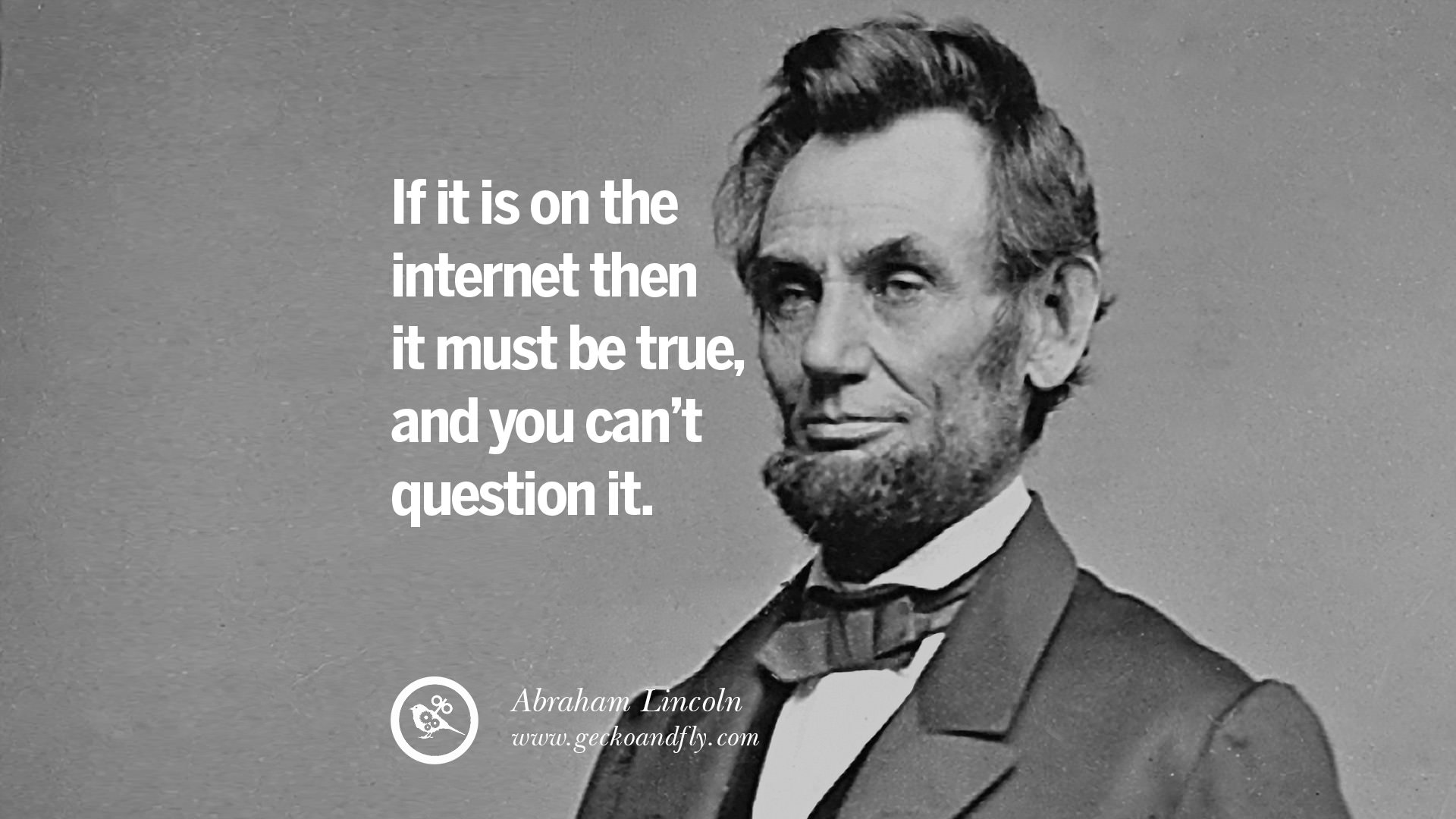
Fight Fake News


The term "fake news" has been flung about a lot lately.  What is it?  How do we fight it?  How do we teach our students to wade through it?

Fake news is just what the term implies - "news" that is untrue.  As librarians, we exist to help other find accurate information.  Because this is our truest purpose, Marcus Banks laments that "the recent explosion in unverified unsourced, and sometimes completely untrue news has been discouraging."  And so librarians can help are helping their learning communities fight fake news.

Where does fake news even come from?  As Banks explains, "the majority of US adults are getting their news from in real time from their social media feeds.  These are often uncurated spaces in which falsehoods thrive."  News that is intentionally 100% fake is less common, but still a real problem.  Banks says "the news-savvy consumer is able to distinguish fact from opinion," but "growing evidence suggests these skills are becoming rarer."  Simply put, it is easier and faster to Google answers and share Facebook posts that it is to look for the facts.  

So how to we encourage our students to do the latter?

This viral infographic shows popular news sources and where they fall on the spectrum of bias, depth, and reliability.  Simply posting this in your classrooms would give students a nudge to choose better sources for their inquiries.


TedED published an interactive video lesson about how false news can spread.  The 3:42 minute video explains circular reporting with accompanying quiz and discussion questions.  Using this exercise in class would help students at all levels understood the fake news phenomenon.


Here are some more resources:

Information literacy is as important as ever, perhaps even more so.  As we fight fake news in our daily lives, information literacy becomes a vital skill for all 21st century learner.

Wednesday, March 1, 2017

Using Discussion Boards Effectively

With the use of new learning strategies that combine online and face-to-face communication, discussion board posts have become more common in the classroom.  The high school teachers have come to use resources like Google Classroom as an essential part of their routine.  With that in mind, I thought it might be a good idea to share some pros and cons and activity ideas.  Please feel free to respond with tips or tricks that you have found to be effective in your classroom.


Discussion boards can serve a lot of purposes in any content area.  Here are some of the general benefits:
  • Builds a classroom community
  • Allows time for reflection before responding to a prompt
  • Allows students to reflect on each other’s work
  • Develops writing skills


When preparing to use a discussion board, it’s important to make sure it’s effective.  Questions related to discussion boards might include:
  • How do you grade participation in a discussion board?
  • What requirements do you outline in advance for the students?
  • How do you ensure that students do not wait until the discussion is wrapping up to participate?
  • How do you keep students on topic?
  • How often should a teacher respond to posts?
  • Should students have to cite their sources in a discussion post?


I completed my masters online through Clarion University.  Discussion boards were usually used as a question prompt, and I had to answer the question and respond to two classmates.  While I know this may have been beneficial, I did not always feel we were making the most out of the discussion board.  Some other activity ideas include:
  • Ask Experts - Invite someone who knows about the topic to answer questions from your class on the discussion board.  This allows them to participate from any location.  There are plenty of online or community experts who would love the opportunity to answer questions posed by the students and a greater opportunity to participate in the classroom.
  • Debates - While this is something that you may already do face-to-face, it would certainly be possible to use this as an online tool as well, allowing students who might not participate as much in person to craft convincing arguments and think in depth before preparing their rebuttal.  It could be done as an extension or as a side activity while working on a different unit or a different project, so that students could come back to it in their spare time.
  • Polling - In the new ISTE standards from 2016, asking students to gather and analyze data is emphasized.  This is something that is used in a variety of career settings and would be beneficial for them to gather real-world data and then discuss the results on the discussion board.  Google Forms is a great way to start, but there are other web resources, such as PollCode for creating a survey.
  • Role Play - Asking students to role play encourages them to see a new side of a topic.  Having students respond as their “character” lets them consider a new viewpoint.  Another version of this might be de Bono’s Six Thinking Hats, which could be used in conjunction with NEWSELA.
  • Peer Review - Student’s view each other’s work and leave constructive criticism on how they did, allowing for student growth.  They will gain new ideas and see new opportunities by sharing.  In this way, technology broadens the audience of a student’s work.

Learning is social.  Discussion boards have been and will continue to be a basic but effective way of creating learning opportunities for students.  If you have other ideas to add or if you want more resources on the topic, please email your friendly building librarian!


References:

[Chromebook with speech bubbles]. (2013, November 8). Retrieved from
https://www.usnews.com/cmsmedia/80/262f3dff4f667d3009b189975e0aa0/49555FE_DA_discussionboardnewl.jpg

de Bono, E. (n.d.). Six Thinking Hats. Retrieved March 1, 2017, from The de Bono Group
website:http://www.debonogroup.com/six_thinking_hats.php

Finley, T. (2014, August 21). New Classroom Questioning Techniques for the Best Year Ever.
Retrieved March 1, 2017, from Edutopia website:
https://www.edutopia.org/blog/new-classroom-questioning-techniques-todd-finley

International Society for Technology in Education. (2016). 2016 ISTE Standards for Students
[PDF].Retrieved from
_final.pdf?sfvrsn=0.23432948779836327

TeacherStream, LLC. (2010). Mastering Online Discussion Board Facilitation [PDF]. Retrieved
From https://www.edutopia.org/pdfs/stw/edutopia-onlinelearning-mastering-online-discussion-board-facilitation.pdf